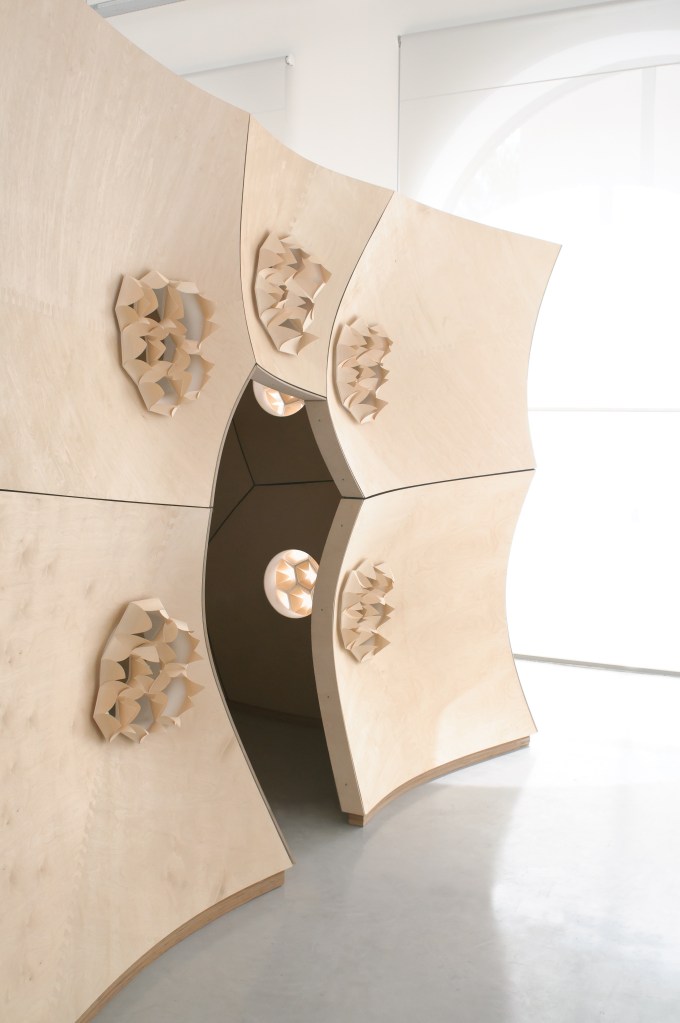
HygroSkin – Meteorosensitive Pavilion is an experimental architectural project that explores climate-responsive design through the intrinsic behavior of material rather than mechanical or electronic systems. The pavilion demonstrates an alternative model of environmental responsiveness in which material, structure, and performance are fully integrated.
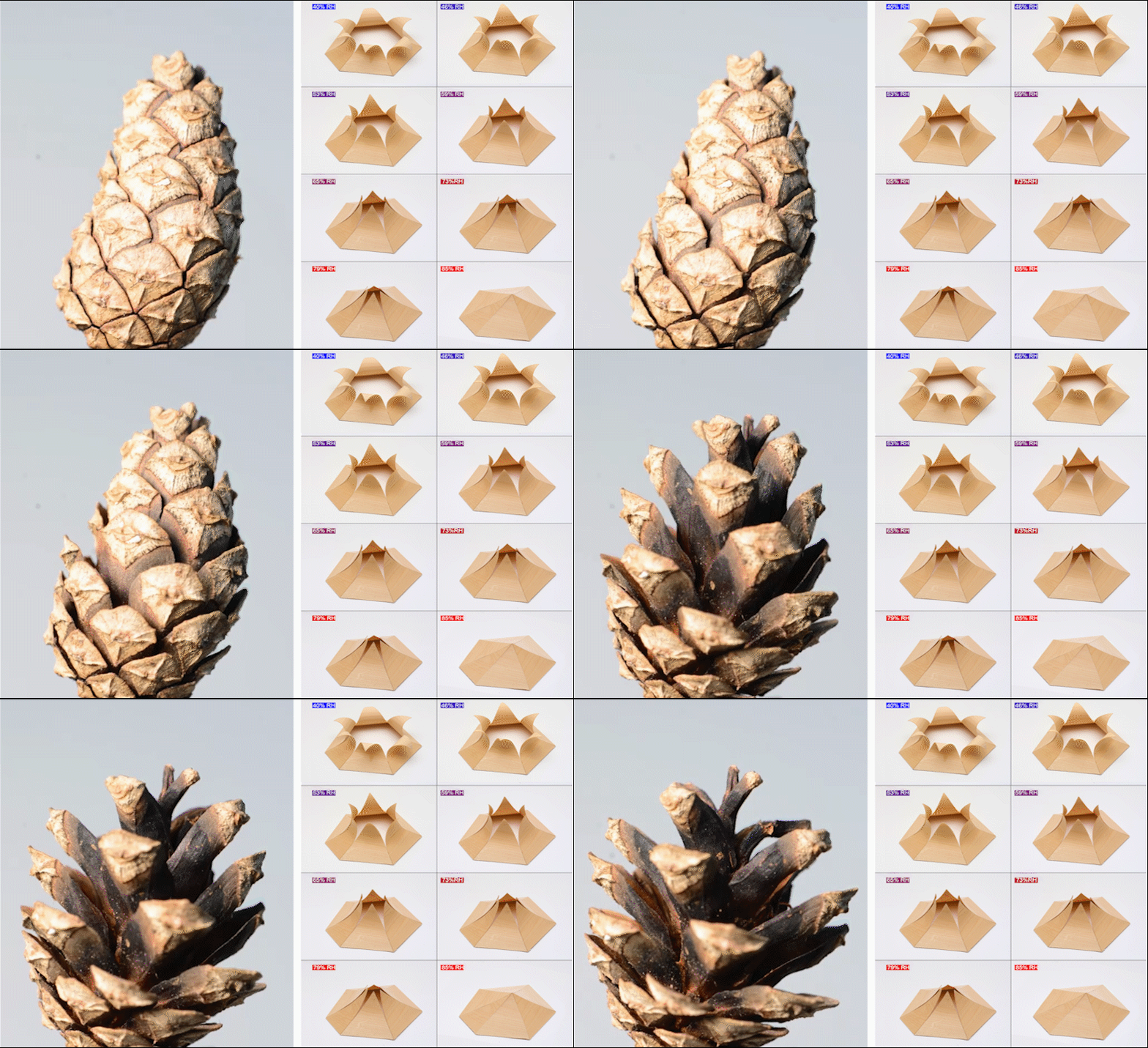
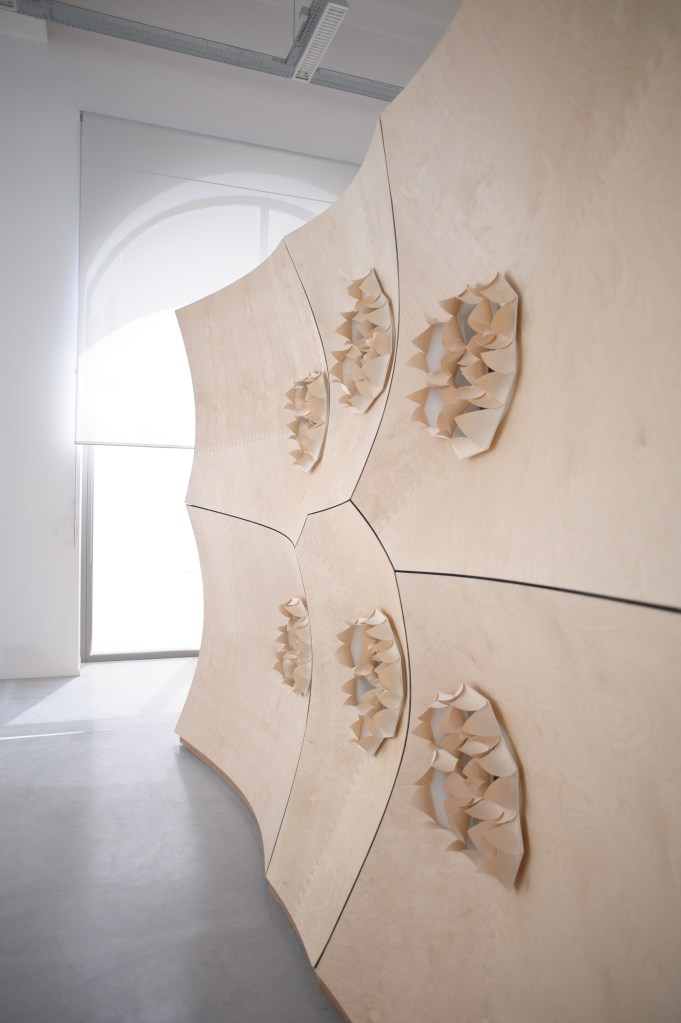
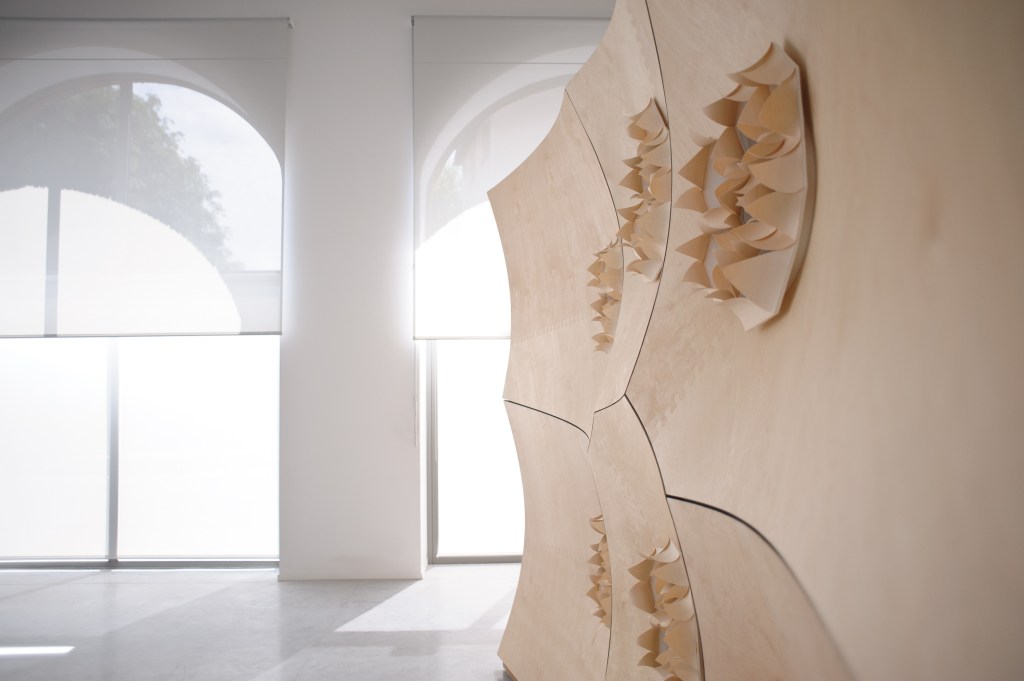
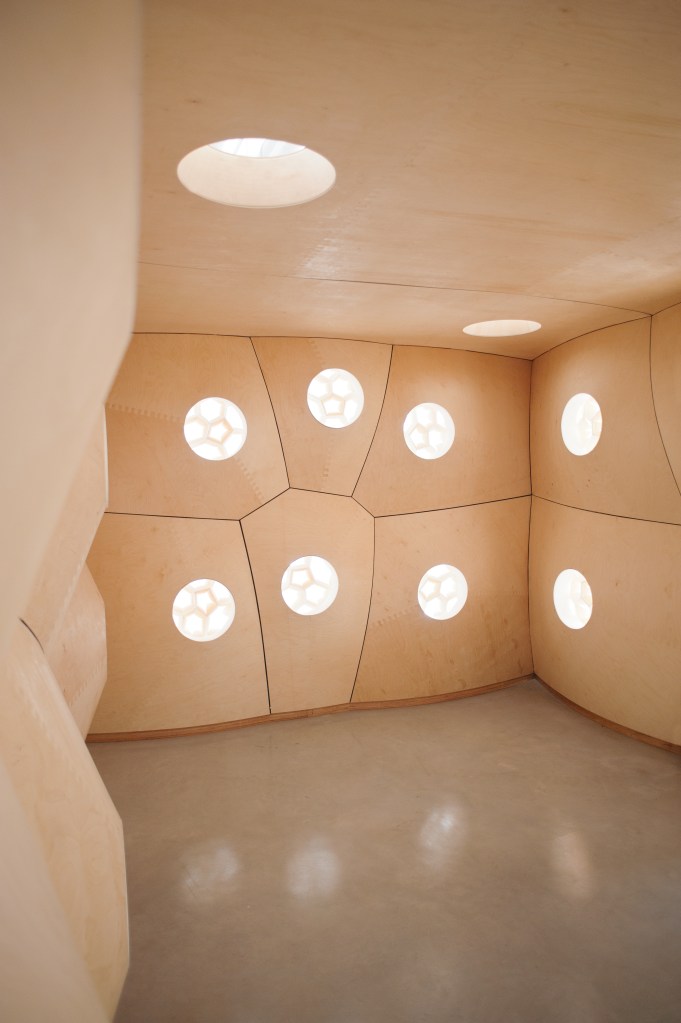
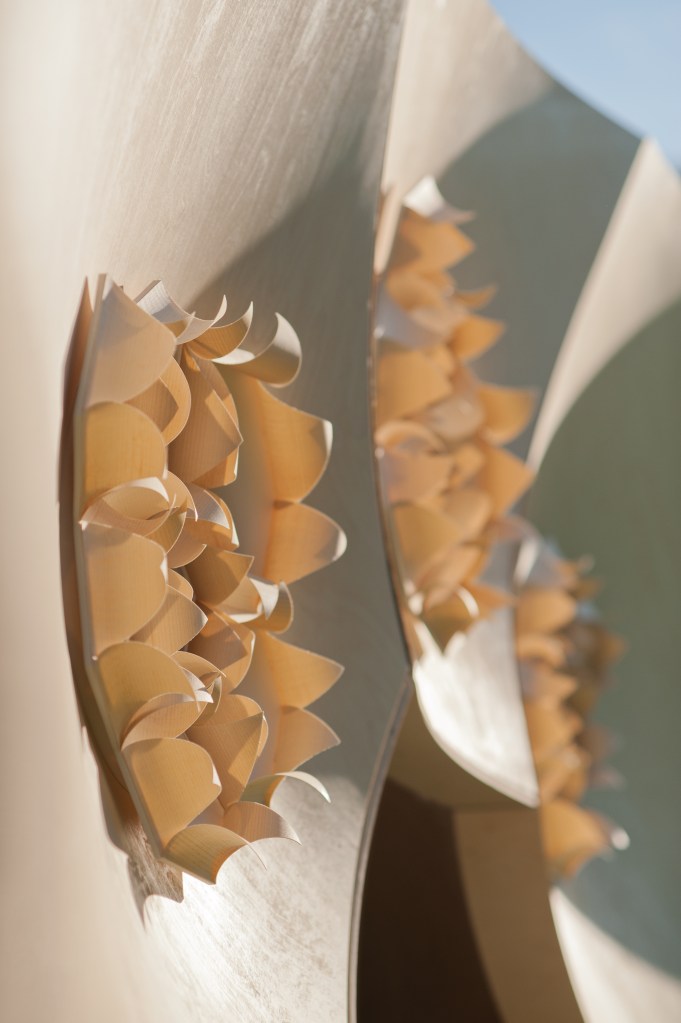
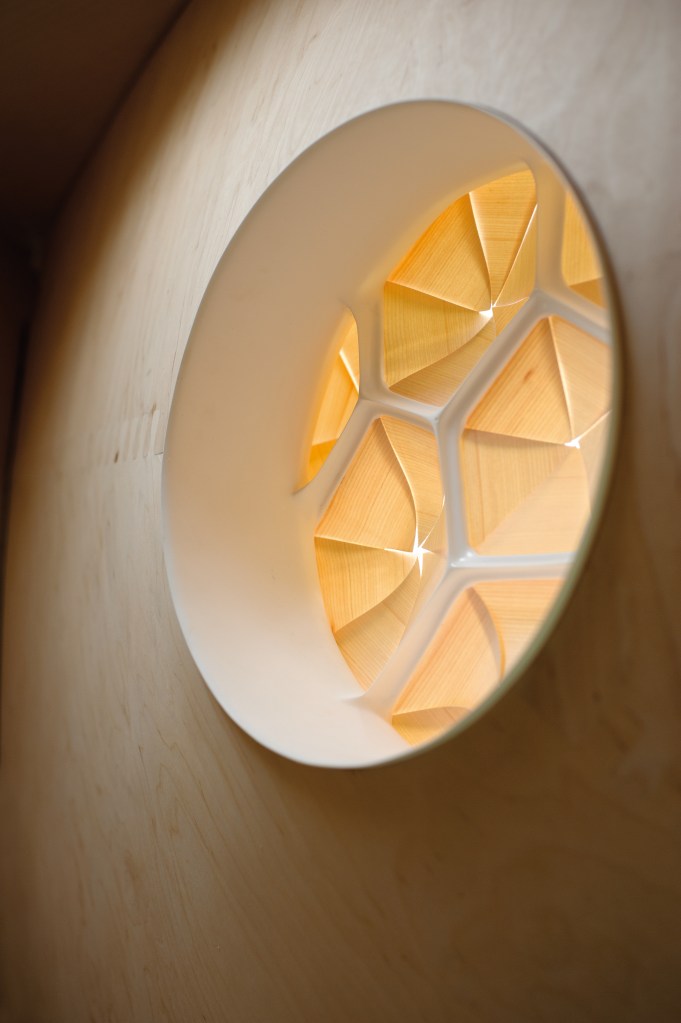
At the core of the project is wood’s hygroscopic nature—its tendency to expand and contract in response to changes in ambient humidity. This dimensional instability is precisely harnessed to create a meteorosensitive architectural skin that autonomously opens and closes as weather conditions shift. Without sensors, motors, or external energy input, the pavilion’s envelope continuously modulates its porosity, light transmission, and visual permeability. Here, the material structure itself acts as a sensing, actuating, and regulating system.
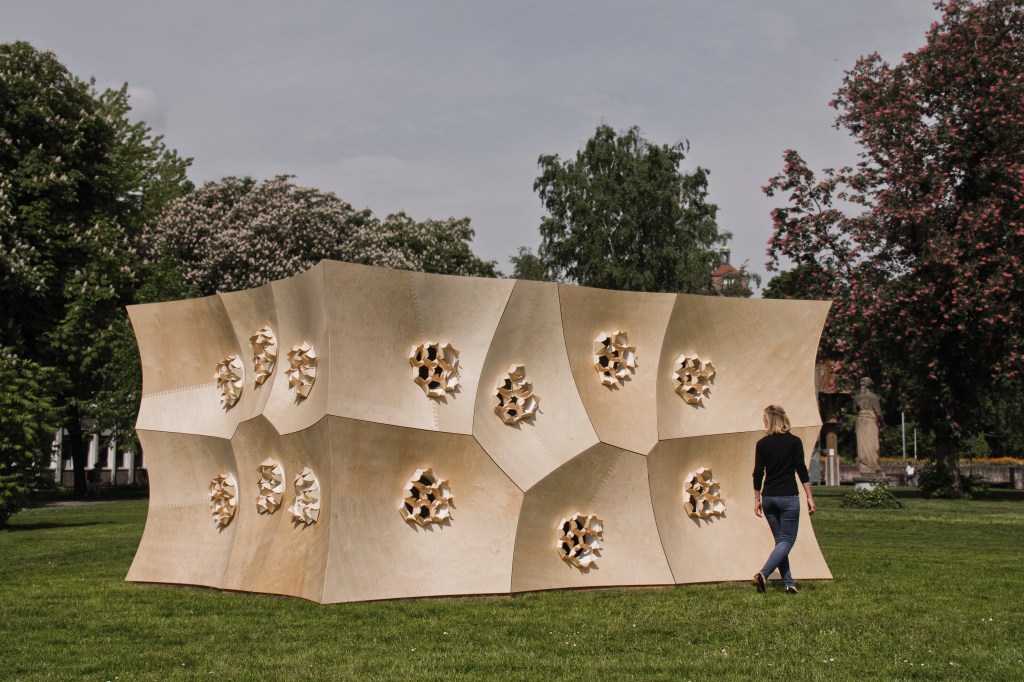
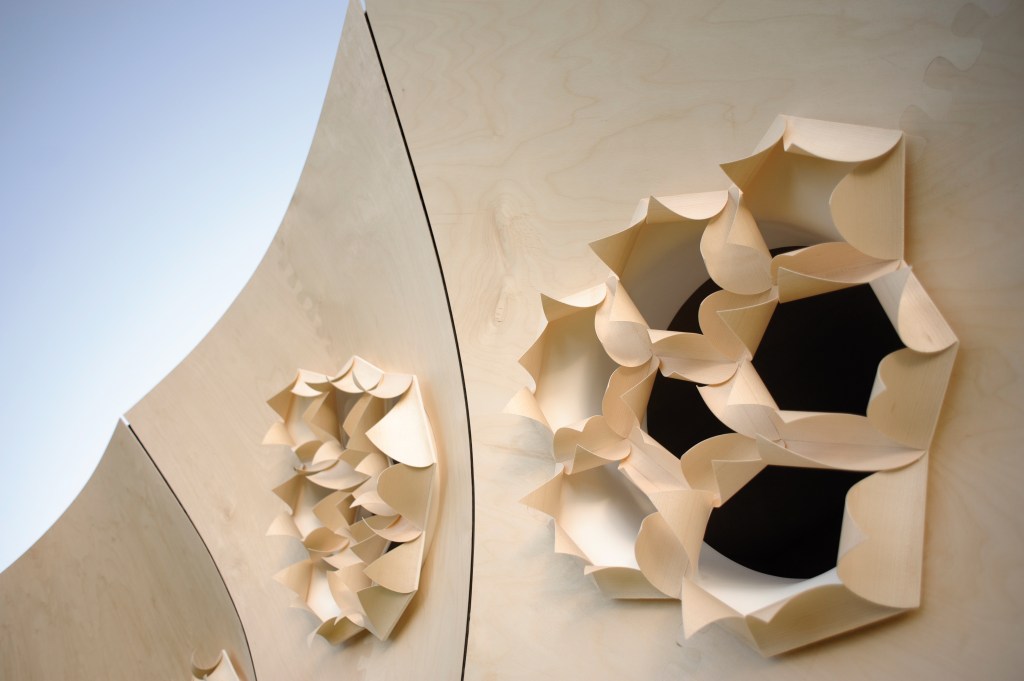
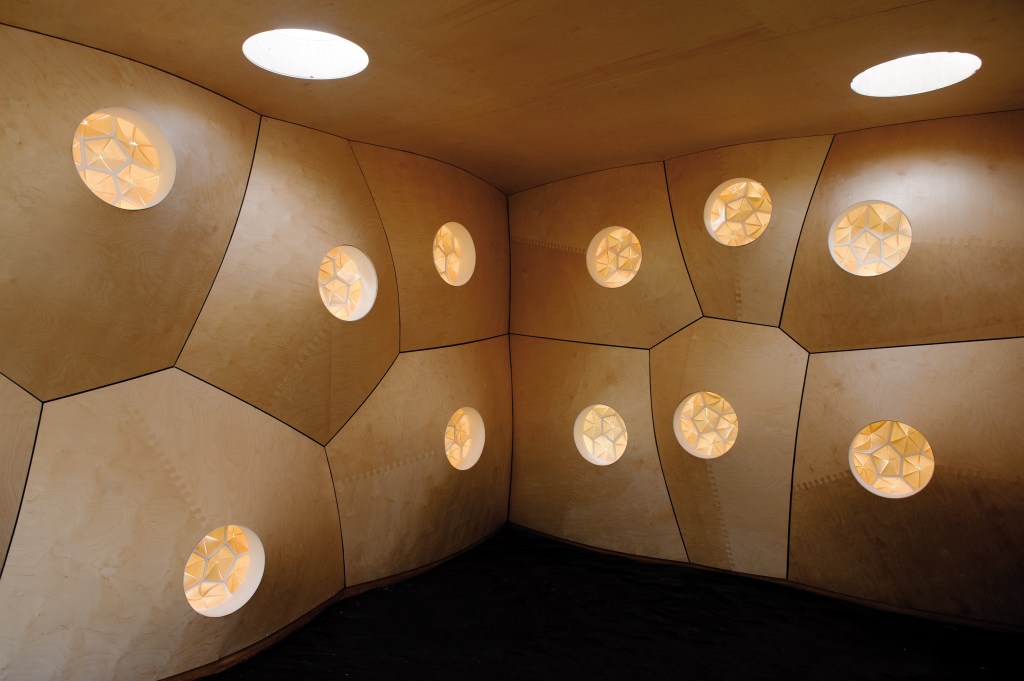
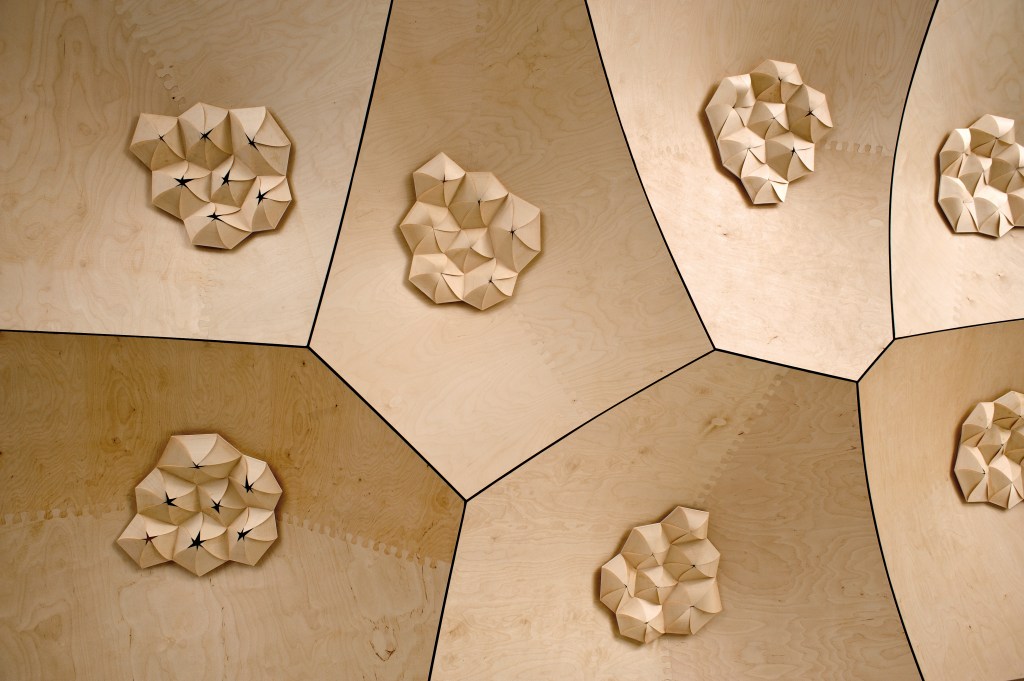
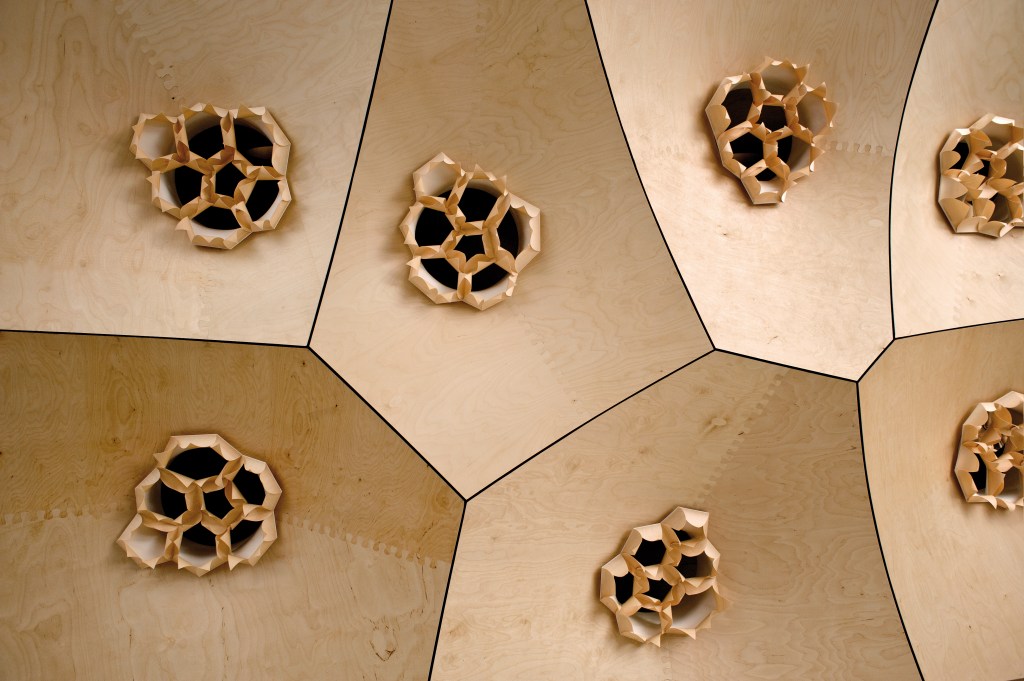
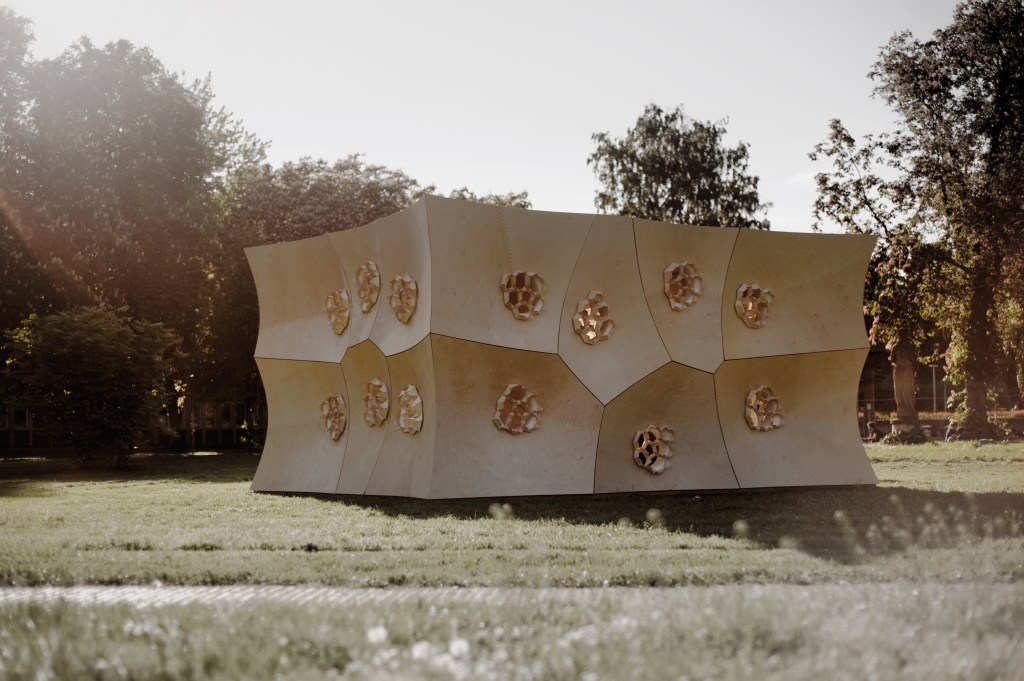
The pavilion consists of a modular wooden envelope formed from thin, planar plywood sheets that elastically self-form into conical geometries. These geometries are computationally derived from the material’s elastic bending behavior and fabricated using advanced robotic manufacturing processes. Each of the 28 unique modules integrates clusters of humidity-responsive apertures—over 1,100 in total—whose movements are materially programmed through layered wood composites inspired by the passive opening and closing mechanisms found in biological systems.
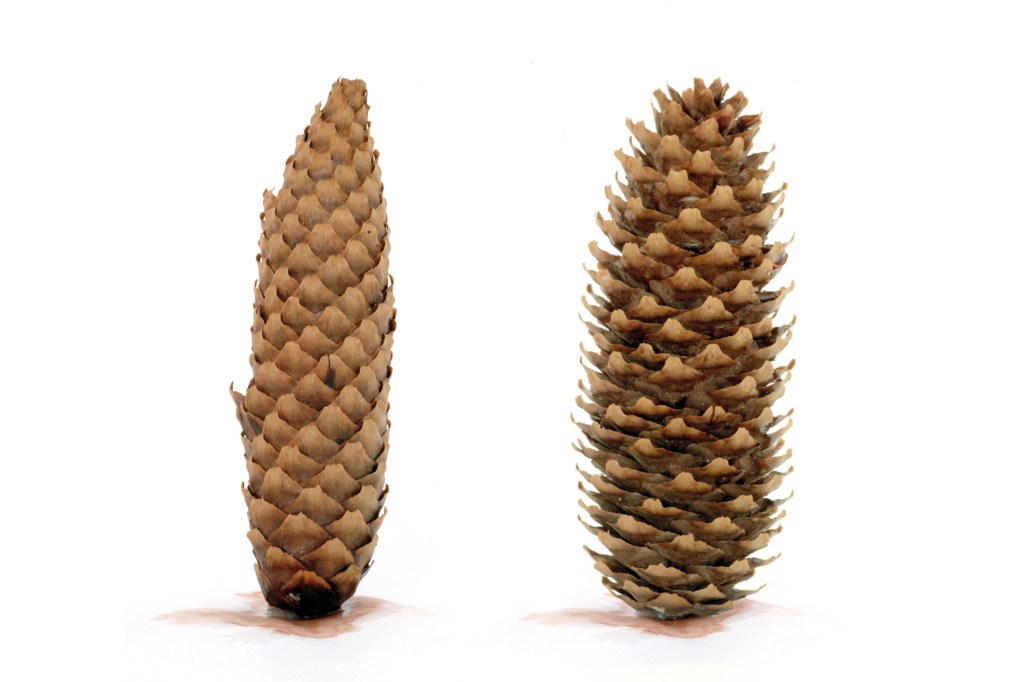

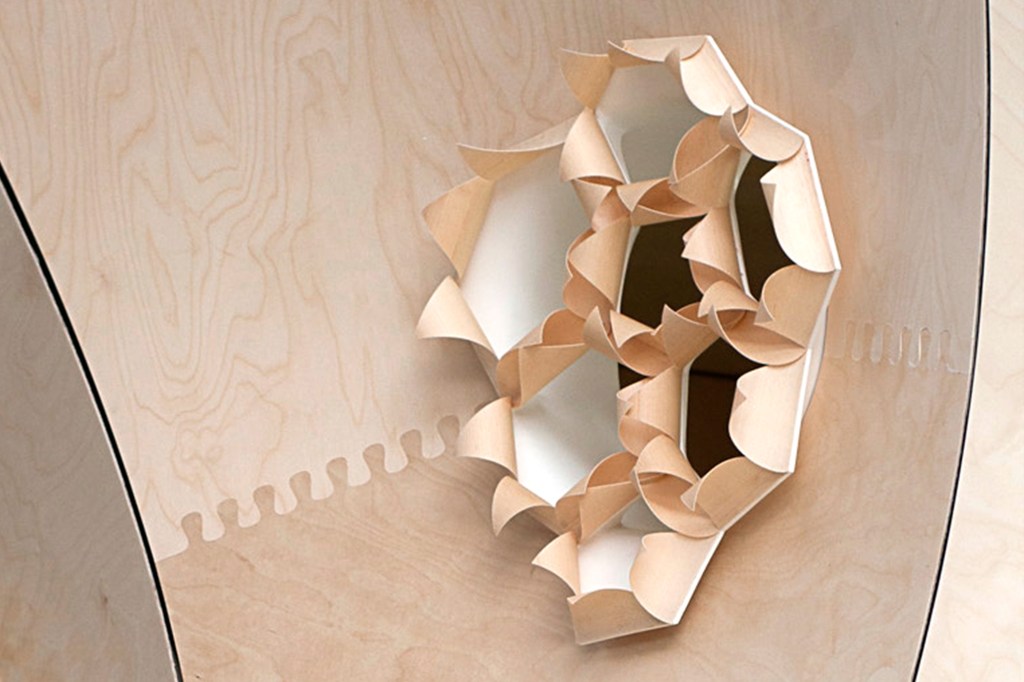
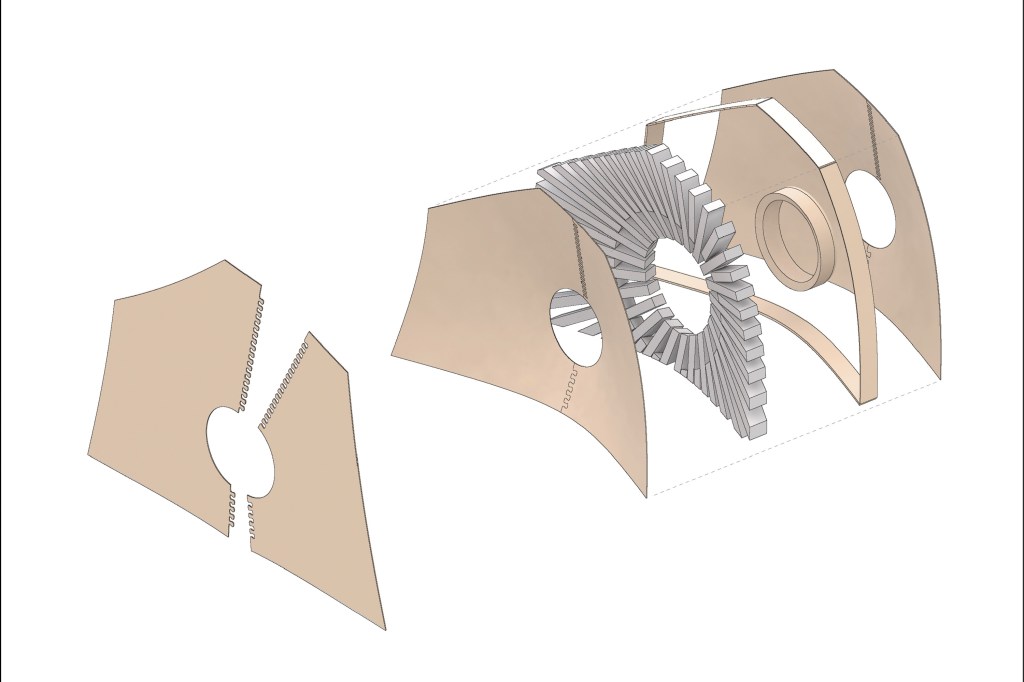
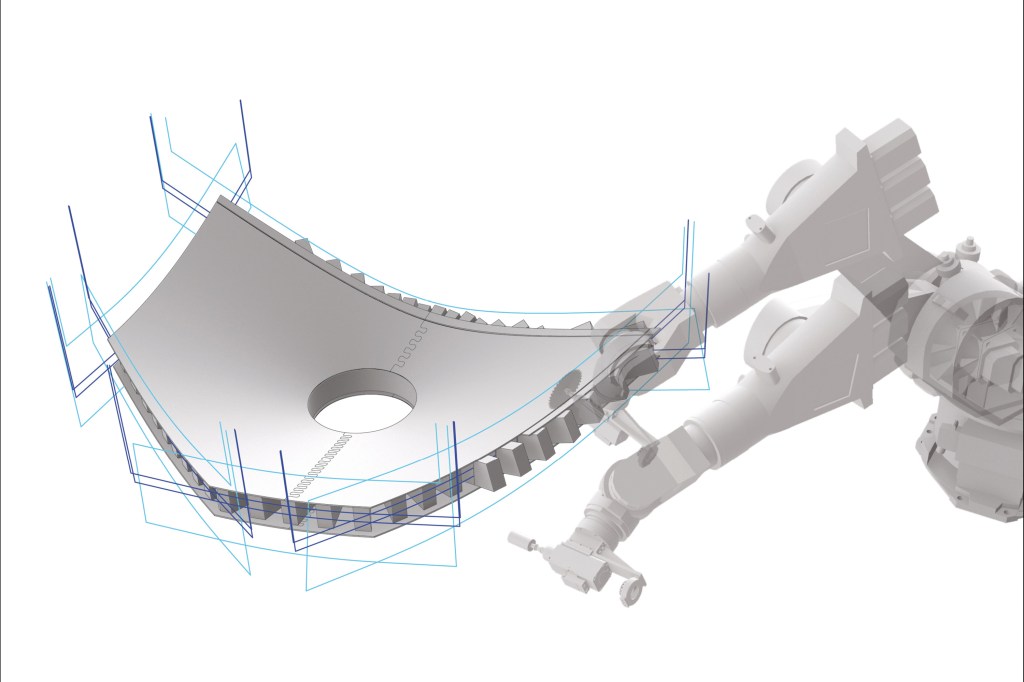
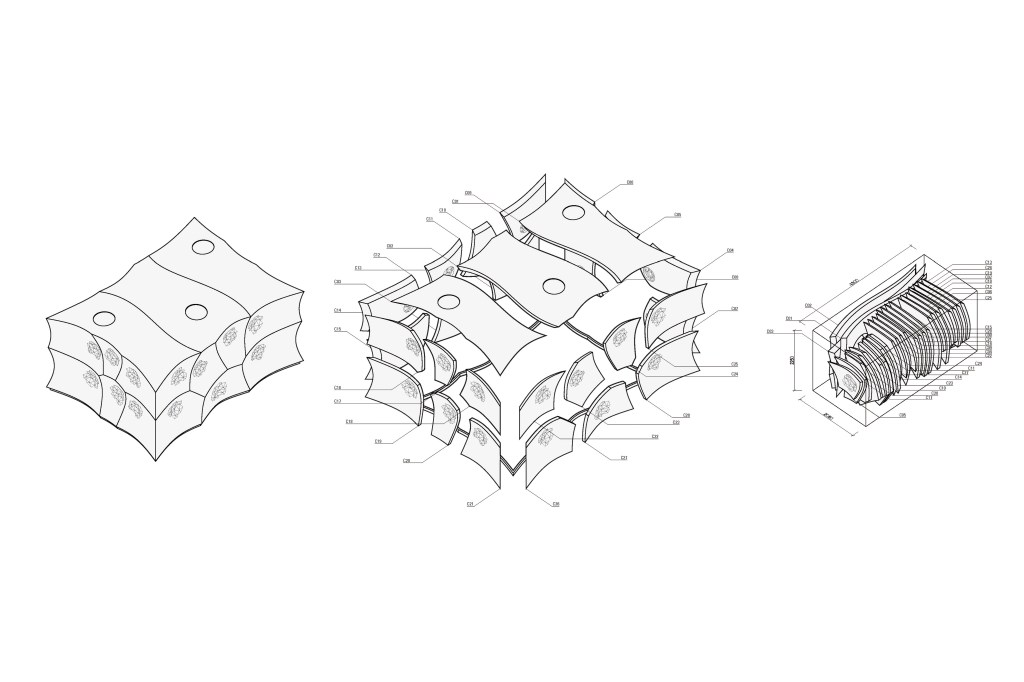
As relative humidity fluctuates between dry and rainy conditions, the pavilion subtly transforms, creating a continuously shifting spatial and environmental experience. HygroSkin exemplifies a biologically inspired, materially embedded approach to architecture, proposing a low-tech yet highly sophisticated model for ecologically attuned design.
Project Team
Achim Menges Architect, Frankfurt
Achim Menges, Steffen Reichert, Boyan Mihaylov
(Project Development, Design Development)
Institute for Computational Design, University of Stuttgart
Prof. Achim Menges, Oliver David Krieg, Steffen Reichert, Nicola Burggraf, Zachary Christian, David Correa, Katja Rinderspacher, Tobias Schwinn with Yordan Domuzov, Tobias Finkh, Gergana Hadzhimladenova, Michael Herrick, Vanessa Mayer, Henning Otte, Ivaylo Perianov, Sara Petrova, Philipp Siedler, Xenia Tiefensee, Sascha Vallon, Leyla Yunis
(Scientific Development, Detail Development, Robotic Fabrication, Assembly)
Project Funding
FRAC Fonds Régional d’Art Contemporain du Centre
Robert Bosch Stiftung
Kiess GmbH
Cirp GmbH
Holzhandlung Wider GmbH
Related Publications:
Correa, D., David Krieg, O., Menges, A., Reichert, S. and Rinderspacher, K. (2013) ‘HygroSkin: A prototype project for the development of a constructional and climate responsive architectural system based on the elastic and hygroscopic properties of wood’, Acadia 2013: Adaptive architecture : proceedings of the 33rd annual conference of the Association for Computer Aided Design in Architecture, October 21-27, 2013, Cambridge, Ontario. [Toronto], Riverside Architectural Press.
Krieg, O. D., Christian, Z., Correa, D., Menges, A., Reichert, S., Rinderspacher, K. and Schwinn, T. (2014) ‘HygroSkin: Meteorosensitive Pavilion’, in Gramazio, F., Kohler, M. and Langenberg, S. (eds) Fabricate: negotiating design & making, Zurich, gta-Verl., pp. 60–67.
Reichert, S., Menges, A. and Correa, D. (2015) ‘Meteorosensitive architecture: Biomimetic building skins based on materially embedded and hygroscopically enabled responsiveness’, Computer-Aided Design, vol. 60, pp. 50–69.
 david-correa.com