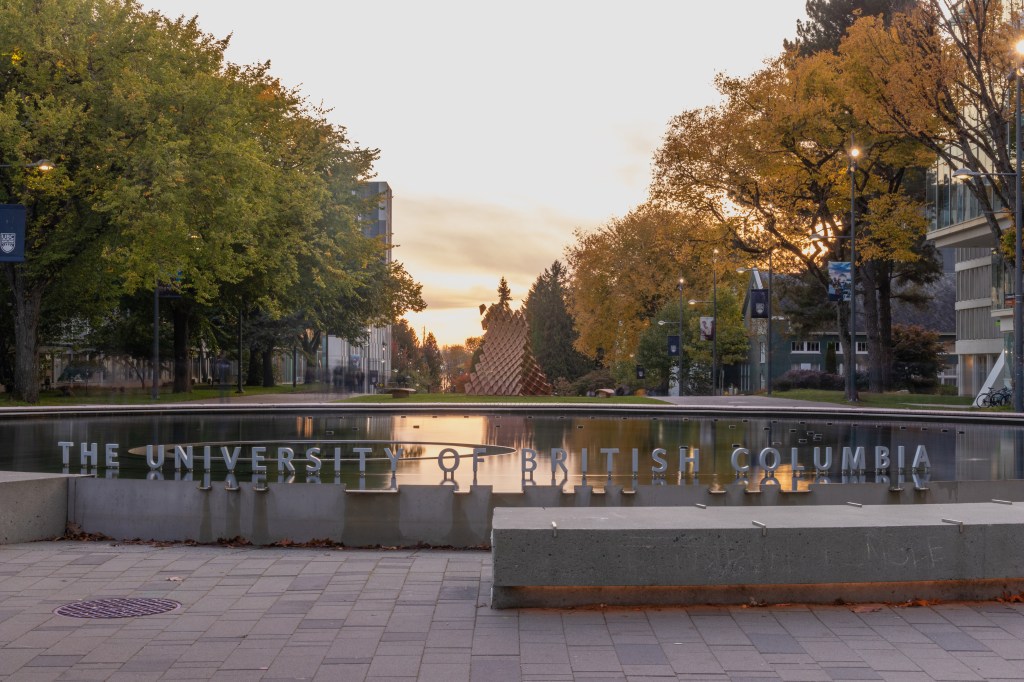
The Dragon Skin Pavilion is a robotically-fabricated temporary pavilion, installed at the University of British Columbia. The pavilion is the result of a workshop hosted by the School of Architecture and Landscape Architecture (SALA) and the Centre for Advanced Wood Processing (CAWP), which took place from October 5-9, 2019. The workshop was led by Assistant Professor David Correa of the University of Waterloo, Oliver David Krieg of Intelligent City, and SALA Associate Professor AnnaLisa Meyboom.
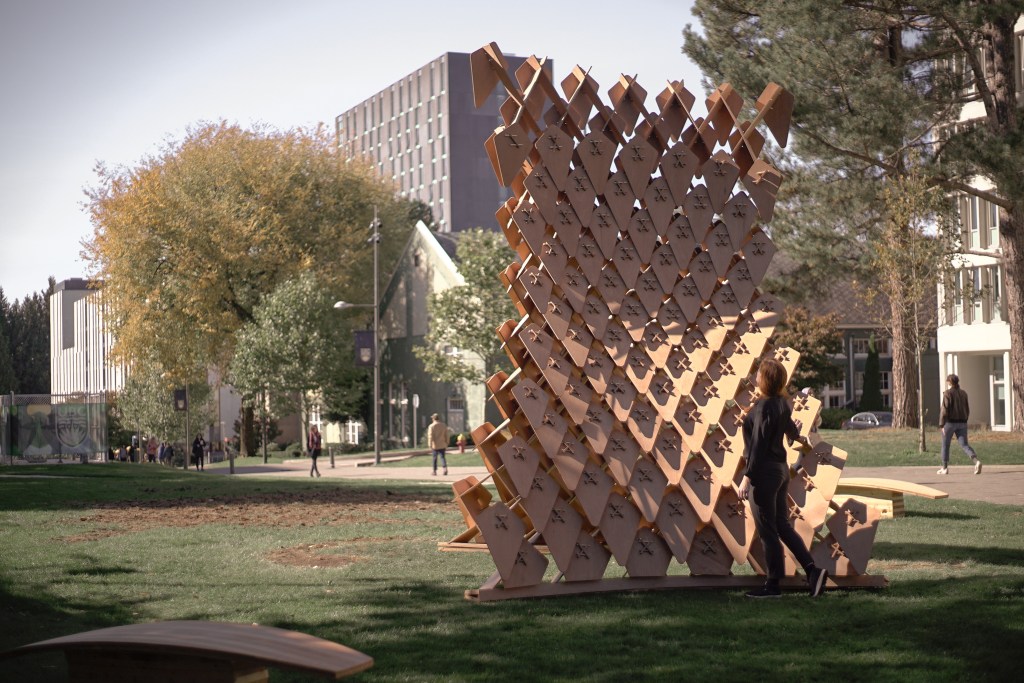
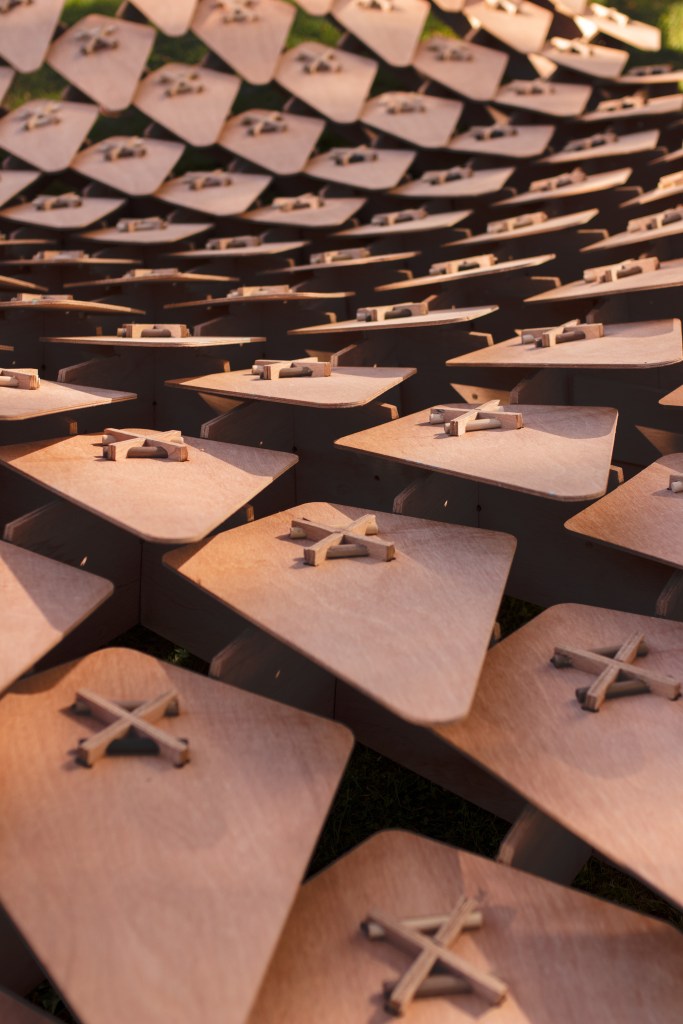
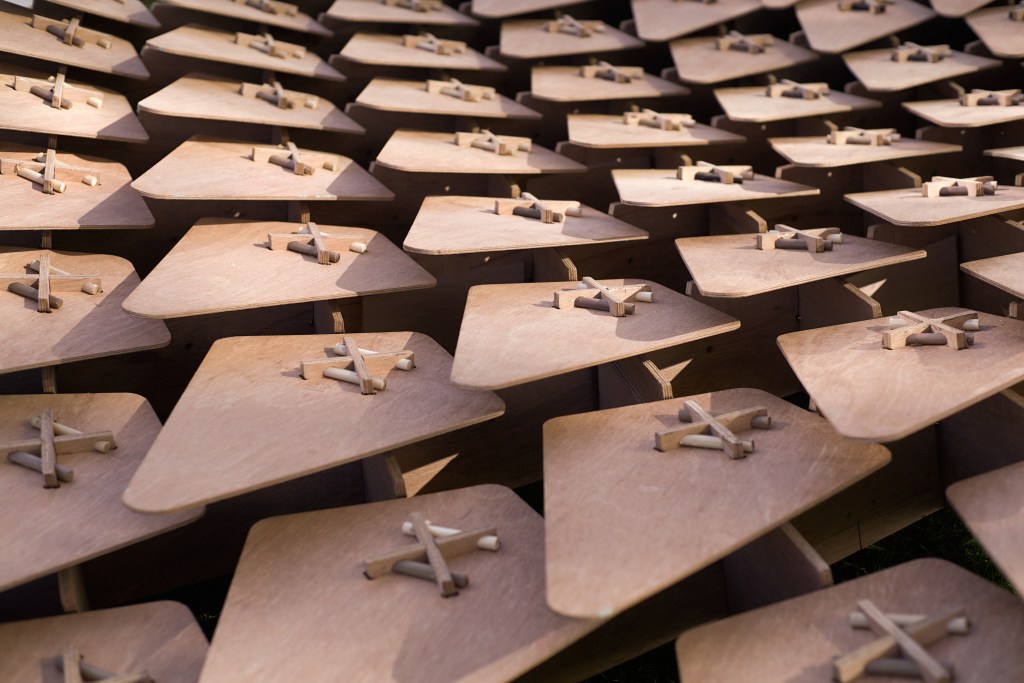
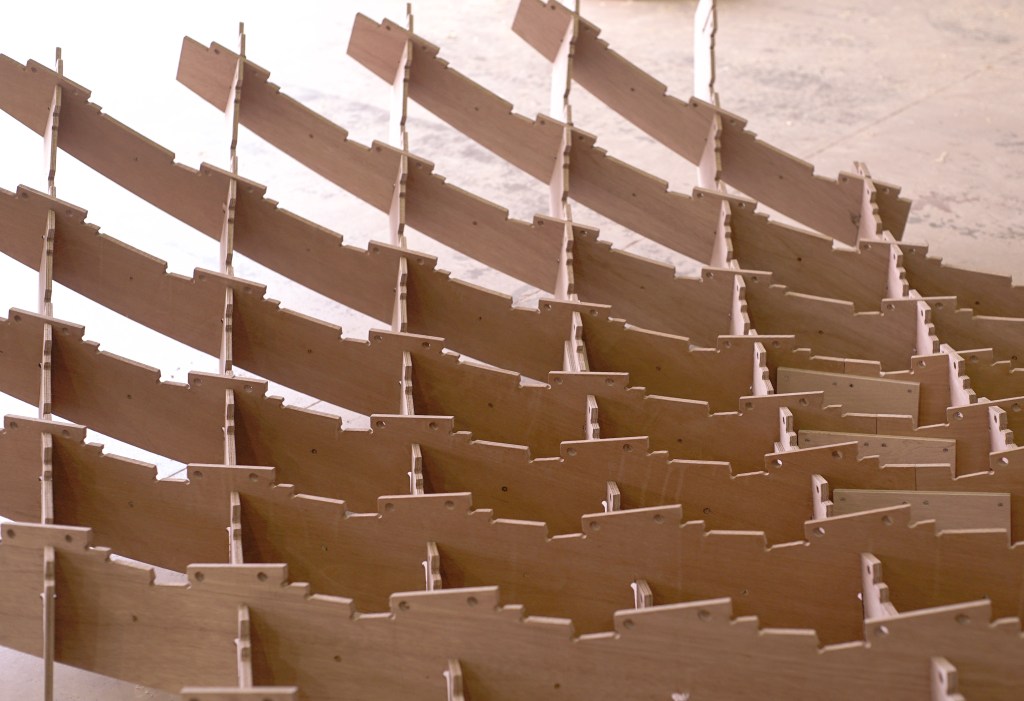
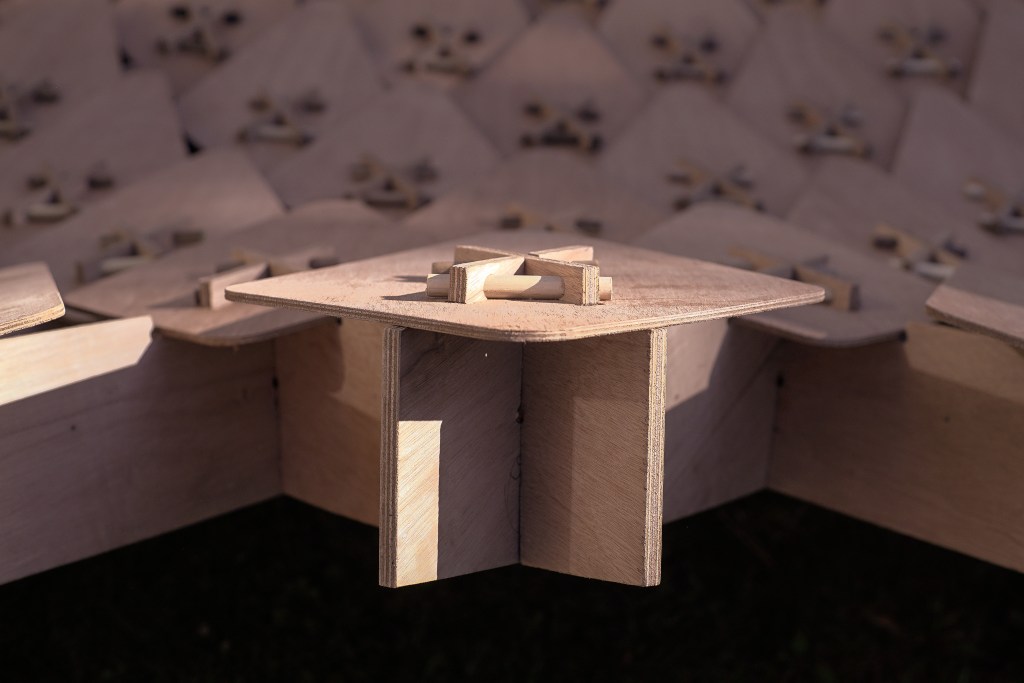
This experimental structure is assembled without any metal fasteners, drawing inspiration from Japanese and Chinese building traditions. The pavilion is composed of an elastically bent gridshell structure that is connected and held in place by structural shingles. These shingles, held in place by wooden dowels, act as strong moment connections by restricting the potential rotational movement of the passing gridshell members. The shingles also provide cover from the rain.
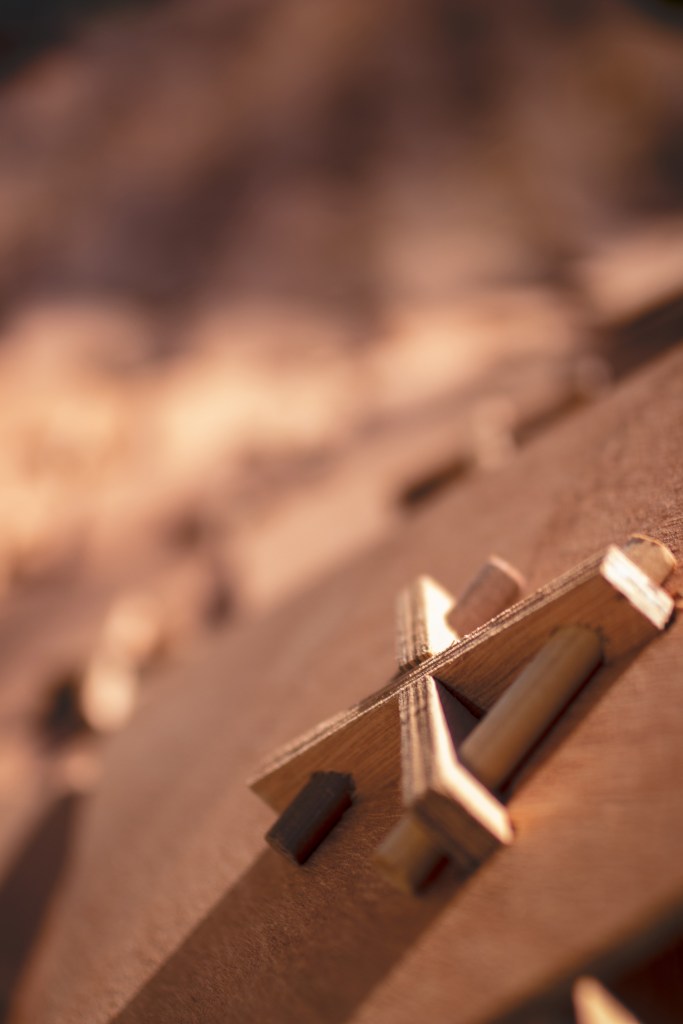
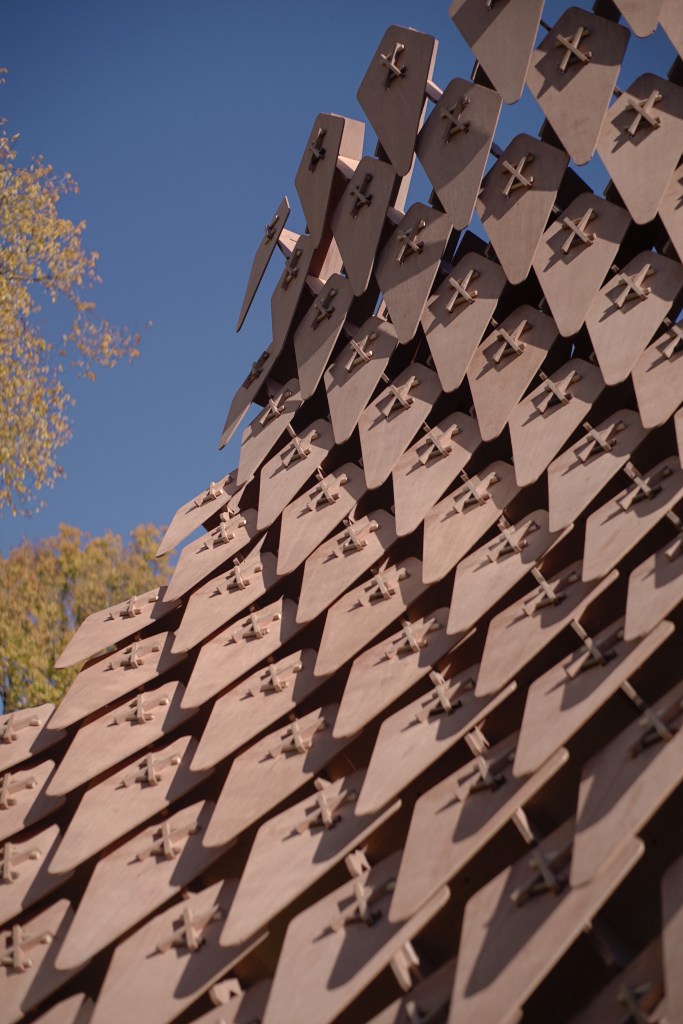
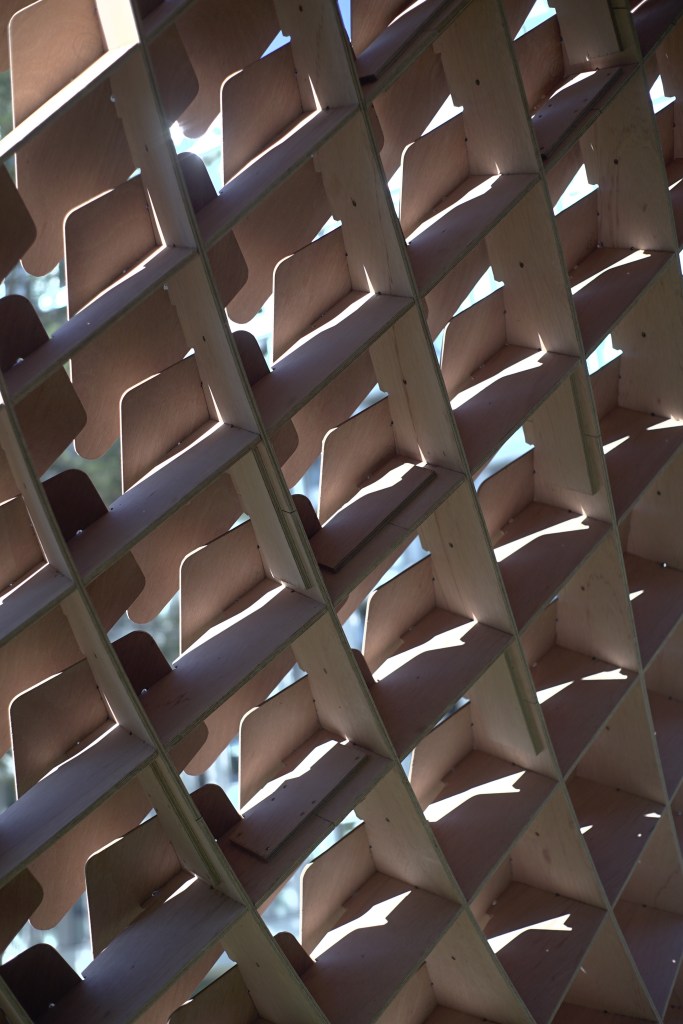
Traditional Japanese and Chinese wood joinery have a long history of skillfully crafting wood-to-wood joints that are not only highly functional, but artistically expressive as well. The skills necessary for this work, while still practiced today, have not been prevalent for over a century due to the mechanization of production and standardization of components. Through the use of robotics, highly articulated and performative joints can once again be fabricated. The Dragon Skin Pavilion demonstrates the new capabilities of the technology to develop innovative material applications that harness the unique properties of wood to animate public spaces.
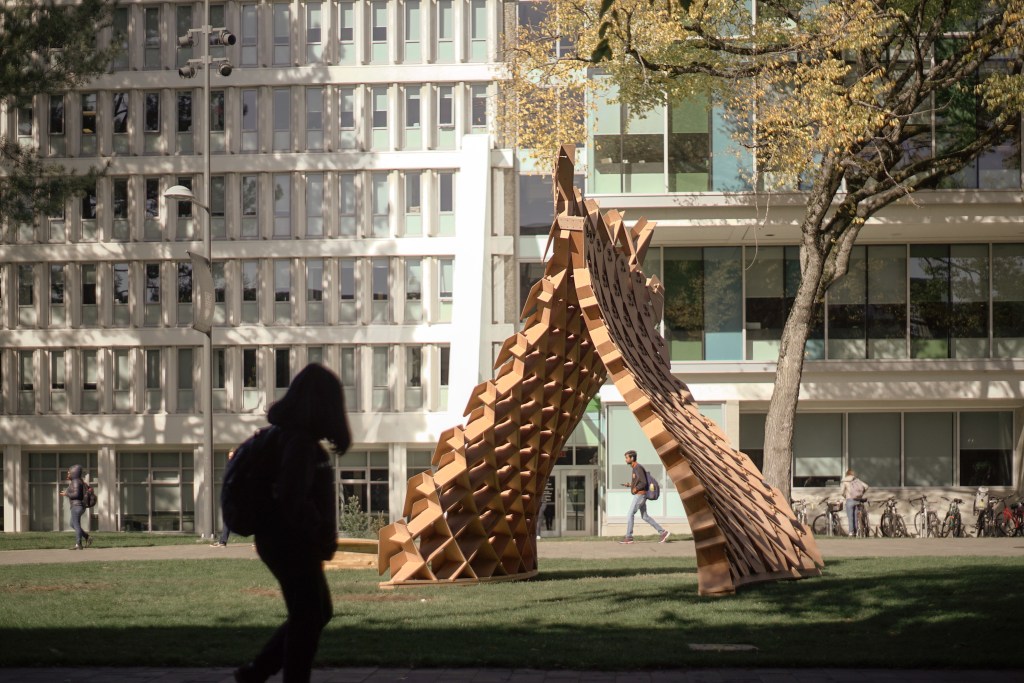
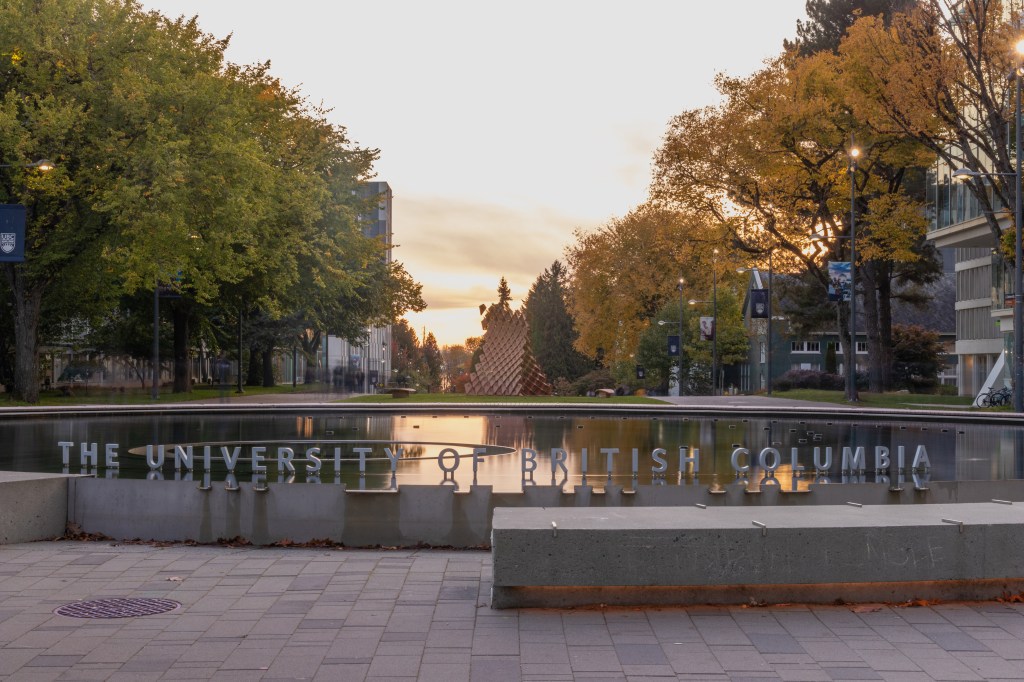
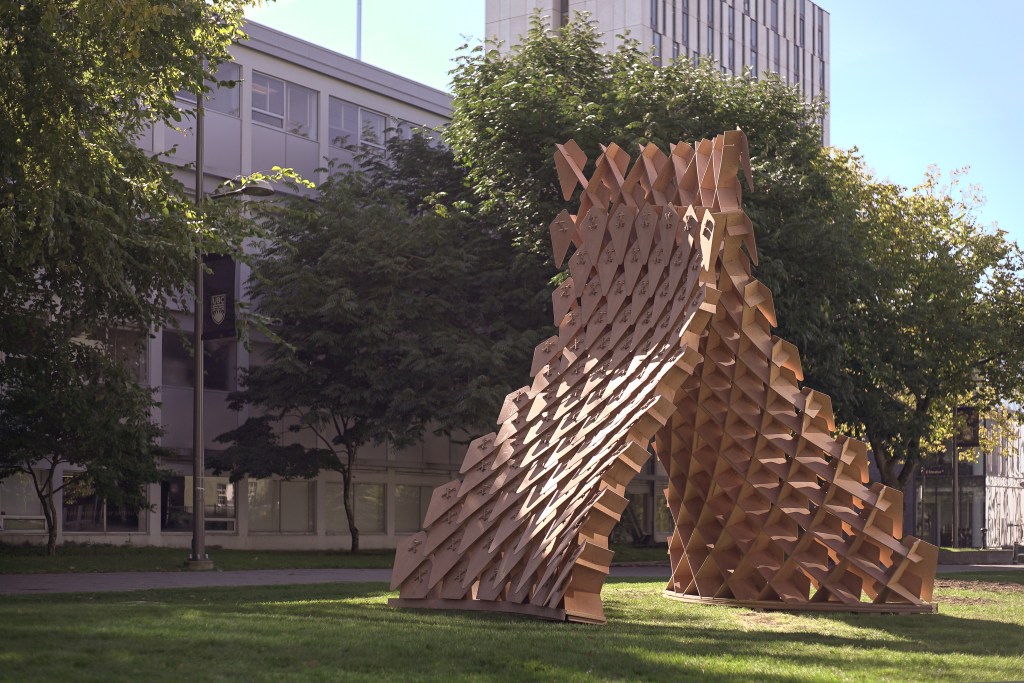
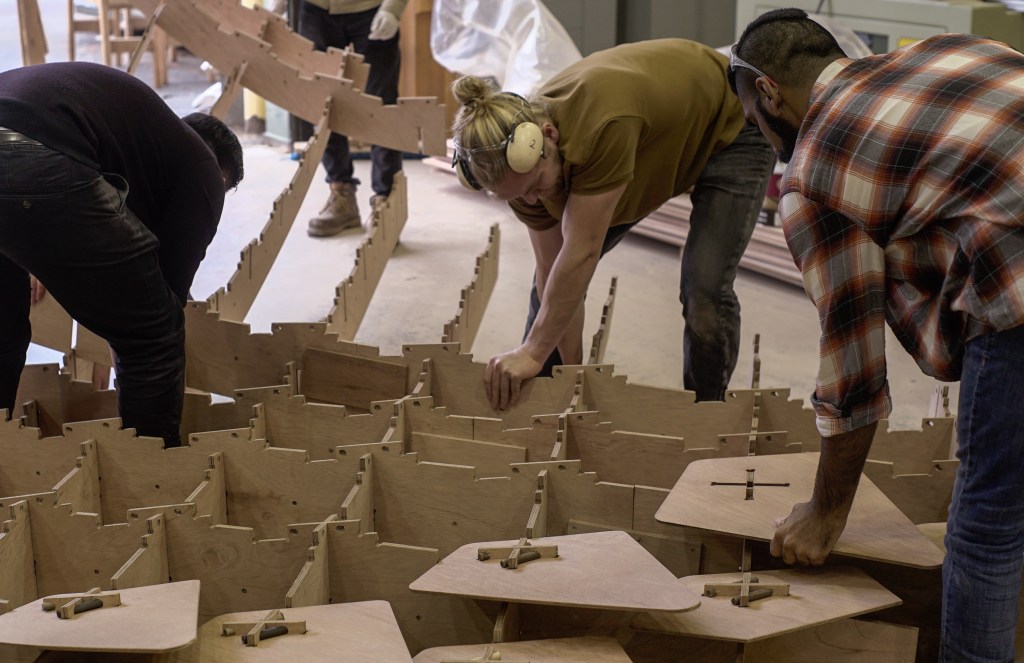
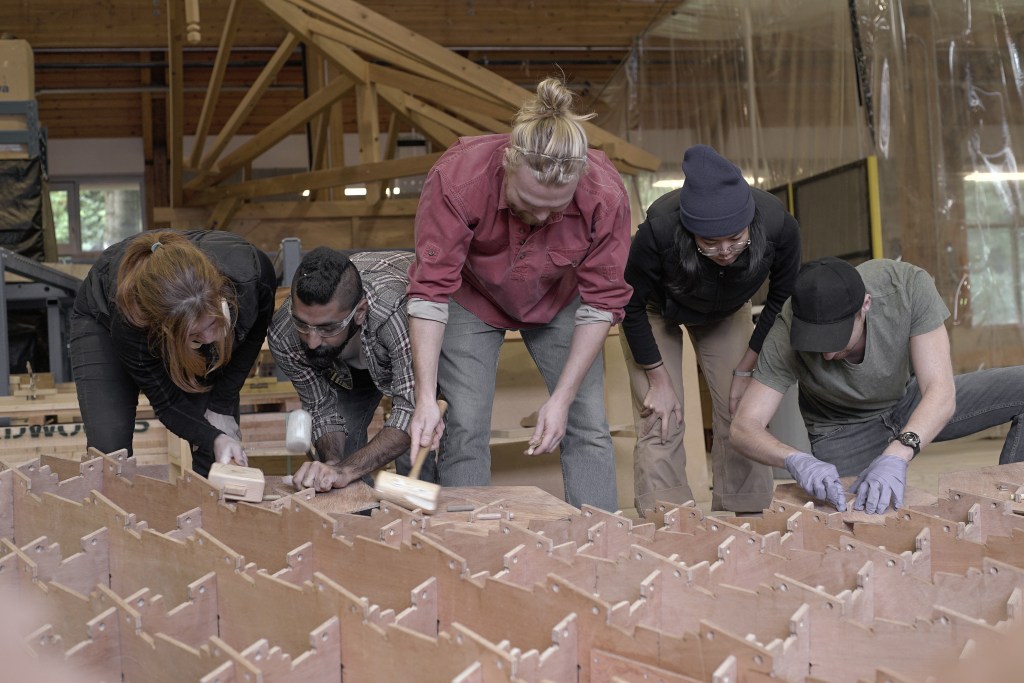
Fabricated and assembled over 3 days, the pavilion is an adaptable design-to-fabrication system that can be customized to suit local material availability and fabrication tools. Each workshop participant is provided with the tools and skills required to develop a unique version that can better meet their needs. Built using the state-of-the-art eight-axis industrial robot at CAWP, the pavilion demonstrates how old materials and new technologies can reshape our built environment.
Design & Development
David Correa
University of Waterloo, LLLab – Design Laboratory
Oliver David Krieg
LWPAC+IC, odk.design
AnnaLisa Meyboom
UBC SALA
UBC Project Leads
Jason Chiu
Jörn Dettmer
UBC Centre for Advanced Wood Processing: http://cawp.ubc.ca/
Dean Gregory
Campus and Community Planning
David Gill
UBC SEEDS Sustainability Program
Built by
UBC Students:
Emilia Brasdefer, Shirley Duong, Thomas Foster, Ellen Harper, Alexandra Ianoul, Ho Yun Law, Yiguan Li, Samuel Shulman, Yekta Tehrani, Angela Wen
University of Waterloo Students:
Colin Willaims, Shabaan Khokhar, Ethan Schwartz
Teaching Assistants:
Lys Hermanski, Sarah Klym, Derek Mavis
Industry Participants:
Blair Birdsell – Equilibrium Engineering, John Boys – Nicola Logworks, David Girard – Peak Ventures, Vicente Hernandez – Universidad de Concepcion, Kyle Malinsky – Fraserwood Industries Ltd., Jinsu Park – KPMB Architects, Jason Skladan – Skladan Design, Stuart Wylie – East Fraser Fiber
Funding
Forest Industry Innovation
This project is a collaboration between students, staff, faculty, and external partners as part of UBC’s SEEDS Sustainability Program
Filmed and Edited by Shabaan Khokhar.
Related Publications
Meyboom, A. and Correa, D. (2022) ‘The path to future wood: Component based structural assembly systems’, in Cruz, P. J. and Hvejsel, M. F. (eds) Structures and Architecture A Viable Urban Perspective?, London, CRC Press, pp. 303–310.
 david-correa.com